Soft Focus — Desk height
Your desk is probably two inches too tall
It is the most common fault in a home office and the least diagnosed, because nothing about it looks wrong. Your shoulders just ache by three o'clock.
A standard fixed desk is 29 to 30 inches high. That number is not an ergonomic recommendation — it is a manufacturing convention, and it suits people roughly 5'8" to 6'0". Everyone shorter is working at a surface built for someone else.
The reason nobody catches it is that a desk two inches too tall does not feel too tall. It feels like a desk. You lift your shoulders half an inch to reach the keyboard, hold them there for eight hours, and blame the ache on stress or a bad chair.
The five-second test
Sit down properly, feet flat, and rest your hands on the keyboard the way you would if you were about to type. Now look at two things.
- Your shoulders. If they are lifted at all — even slightly, even in a way you would not have noticed unaided — the surface is too high.
- Your wrists. If they bend upward to reach the keys rather than running flat from your forearm, the surface is too high.
Neither of these improves with practice. You do not adapt to a desk that is the wrong height; you just stop noticing you are compensating.
If you use a laptop on a table, you fail this test by definition. A laptop puts the screen and the keyboard in the same place, so either the screen is too low or the hands are too high. There is no position that solves both.
Measuring it properly takes one minute
Your own body beats any chart. Here is the method:
- Sit back in your chair with your feet flat on the floor and your thighs roughly parallel to the ground.
- Let your shoulders drop completely. Do not hold them anywhere.
- Bend your elbows so your forearms are level — somewhere between 90 and 100 degrees at the elbow.
- Measure from the floor to the underside of your elbow.
That measurement is your ideal seated desk height. Not approximately — that is the number. Compare it to the desk you are sitting at now.
What the number usually looks like
Use this only to sanity-check the figure you measured. If the two disagree, trust your tape measure.
| Your height | Seated surface | Standing surface |
|---|---|---|
| 5'0" | 22.5 – 24 in | 34 – 36 in |
| 5'4" | 24.5 – 26 in | 36.5 – 38.5 in |
| 5'8" | 26.5 – 28 in | 39.5 – 41.5 in |
| 6'0" | 28.5 – 30 in | 42.5 – 44.5 in |
| 6'4" | 30.5 – 32 in | 45.5 – 47.5 in |
Look at the seated column against that 29-to-30-inch standard. A person of 5'4" wants a surface around 25 inches. A standard desk is four to five inches too tall for them. That is not a rounding error, it is a different piece of furniture.
Three fixes, cheapest first
Raise the chair and add a footrest — usually free
This is the correct fix for a fixed-height desk, and it is the one most people get backwards. Do not lower the chair until your feet reach the floor. Raise the chair until your elbows meet the desk, then put something under your feet.
The Canadian Centre for Occupational Health and Safety recommends exactly this order. A stack of books works. What does not work is letting your feet hang — that puts the full weight of your legs on the underside of your thighs, which is why they go dead by mid-afternoon.
A keyboard tray — two to three inches back
An under-desk tray lowers the typing surface without touching the desk. Check your knee clearance first: you are giving up two or three inches of vertical space under the desk, and if your legs already brush the underside, this trade makes things worse rather than better.
An adjustable desk — the real fix
If the desk is wrong for you and cannot be adapted, replace it. An electric desk removes the problem permanently, and it means the height can be right for sitting and standing rather than a compromise between them.
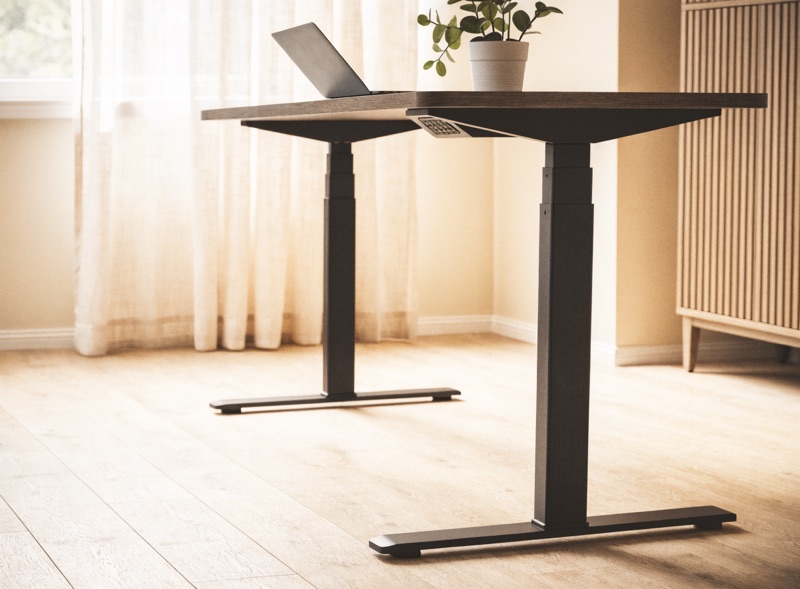
FLEXISPOT EN2 Standing Desk, 48×30″
A whole desk rather than a frame you have to find a top for, so it arrives ready. 48×30 inches, which also clears the depth problem most cheap desks have.
One warning before you order: measure your wall. 48 inches is wider than a lot of alcoves and spare-room corners, and a desk that does not fit is an expensive way to learn that.
Fix the desk before you buy a chair
A good chair under a desk that is two inches too tall is money spent on the wrong problem. The chair cannot lower the desk, so you will still lift your shoulders — you will just do it in more comfortable seating.
Get the height right first. Then, if your back still complains, the chair is worth looking at.
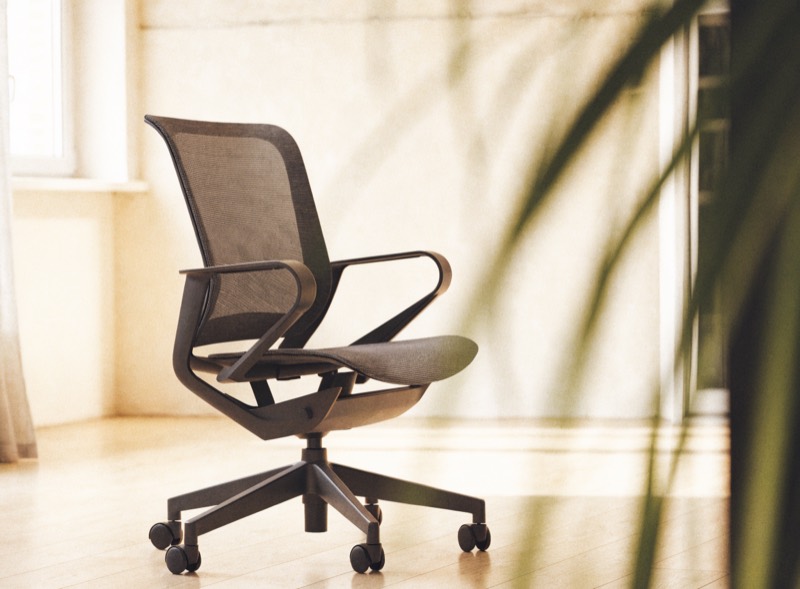
Sihoo M57 Ergonomic Chair
Worth buying once the desk height is right, and not before. The 3pm back ache is usually a kitchen chair rather than a spine problem.
What to do this afternoon
Measure your elbow height. Compare it to your desk. If there is a gap, raise your chair by that amount and put something under your feet — you will know within a day whether it was the problem.
The Home Office Setup Guide
Eighteen pages: the six measurements with a printable worksheet, three complete builds with every piece listed, a lighting plan for awkward rooms, and small-desk layouts. Free.
Get the guide