Soft Focus — Sustainable work
The anti-burnout stack for people who are already tired
Every system worth having asks for setup effort you do not currently have. So this is ordered by what costs least, not by what works best.
Almost all productivity writing is addressed to someone with capacity. Build the system, run the weekly review, protect your deep work block. It assumes a surplus you can invest for a later return.
Past a certain point that advice makes things worse — it adds a project to the list that is already the problem. What follows is ordered by cost to you, cheapest first. Do one. Stop there if you want.
Reduce the input before improving the output
The instinct when overloaded is to get better at processing. It is nearly always cheaper to reduce what arrives.
Noise is the clearest case and the least examined. A room with intermittent conversation costs continuous low-level effort, and because it never announces itself you attribute the resulting fatigue to the work.
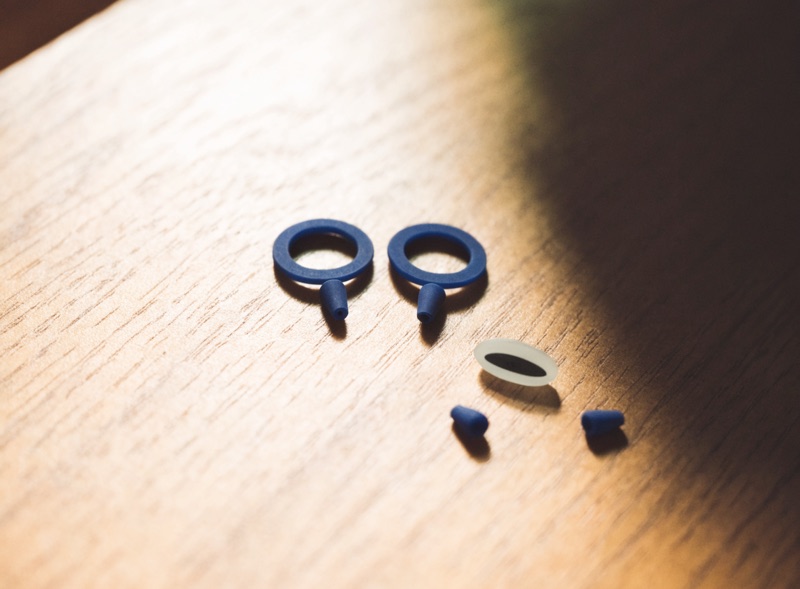
Loop Quiet 2 Earplugs
The lowest-effort intervention here. Nothing pairs, nothing charges, nothing needs a decision — the room drops about 24 dB while speech stays intelligible.
If the noise is steady rather than intermittent — traffic, a hum through a wall — masking works better than blocking.
White Noise Machine for Office Privacy
Adds a constant sound so the variable one stops registering. Better than headphones over a full day, because there is nothing on your head.
Stop holding things in your head
Working memory goes first, and the load of remembering is nearly as expensive as doing. The relief from writing things down is disproportionate to how trivial it sounds.
Capture has to be cheaper than remembering. A digital app fails that test the moment opening it means passing three notifications.
ADHD Daily Planner, undated
Undated, so a missed fortnight does not leave you staring at abandoned pages — the specific failure that makes people give up on planners when tired.
If a planner is too much, use one page and one rule: everything in your head goes on it, unsorted, once a day. No categories, no priorities, no system. The point is not organisation — it is getting the load out of working memory.
Make starting cheap
Exhaustion shows up as difficulty starting far more than difficulty doing. The task is not too hard; beginning it is.
A visible countdown bounds the commitment. Fifteen minutes with an end you can see is a smaller ask than an open-ended session, and the work usually continues past the timer anyway.
FILP Pomodoro Timer, silent + alarm
Flip it to the interval and it starts. No phone, no app, no unlocking a device that will show you six other things first.
Fix the physical thing you have normalised
If your desk is the wrong height, every hour costs more than it should, and you have almost certainly stopped noticing. Tiredness attributed to workload is sometimes tiredness from holding your shoulders up for eight hours.
It takes ten minutes to check and the fix is usually free — the five-second test is the whole diagnostic. Worth doing before concluding the problem is you.
The one habit worth more than any purchase
Everything above lowers friction. This one restores capacity, and it costs nothing: stop working somewhere you also rest.
If the desk is in a bedroom, the room stops signalling recovery and the work never fully ends. You cannot always solve that with space, but you can solve a surprising amount of it with a boundary — closing the laptop and putting it in a drawer, turning a lamp off, moving a chair. A physical action that marks the end.
It sounds trivial. It is the difference between eight hours of work and sixteen hours of low-grade availability, and the second is what actually exhausts people.
What this is not
None of this treats burnout. Burnout is a workload and recovery problem, and no timer or pair of earplugs touches the cause — if demand exceeds what any person could sustain, these reduce friction at the margins and nothing more.
They are worth having because friction at the margins is real, and because lowering it is something you can do this afternoon. That is the entire claim.
The Home Office Setup Guide
Eighteen pages: the six measurements with a printable worksheet, three complete builds with every piece listed, a lighting plan for awkward rooms, and small-desk layouts. Free.
Get the guide