Soft Focus — Biophilic
Desk plants that survive under a lamp, not a window
A plant is the fastest way to stop a workspace feeling like a workstation. It is also the thing most likely to be dead by October.
Biophilic design — the idea that spaces work better with living things in them — has been on every workspace trend list for years. The photographs always show a desk beside a large window.
Most desks are not beside a large window. They are against an interior wall, in a corner, or facing away from the only real light source in the room. That is the actual problem, and it is why so many desk plants die within a season.
Your desk is darker than you think
Light falls off sharply with distance. A spot two metres from a window gets a fraction of the light of one beside it — a far steeper drop than it looks, because your eye adapts and a plant does not.
"Bright indirect light", the phrase on every plant label, means near a window but out of direct sun. It does not mean a well-lit room.
Hold your hand a foot above the desk at midday with the lamps off. A sharp shadow means good light. A soft, fuzzy one means moderate. No real shadow means low light, and your options narrow to a short list.
What actually tolerates it
- ZZ plant. The most tolerant thing you can put on a desk. Stores water in its rhizomes, so it forgives the fortnight you forget it.
- Snake plant. Upright, structural, nearly unkillable. People kill it by overwatering, not by neglect.
- Pothos. The trailing one in every desk photograph. Fast enough that you can see it responding, which is oddly motivating.
- Cast iron plant. Named for the reason you would expect.
What will not work, whatever the shop says: fiddle-leaf figs, calatheas, most herbs, and anything succulent. Succulents are sold as low-maintenance and are the opposite — they want more direct sun than almost any indoor spot provides, and they stretch into pale, leggy versions of themselves within weeks.
The fix is light, and it is cheap
To grow anything beyond the tolerant four, add light. A clip-on full-spectrum lamp on a timer covers a desk plant entirely.
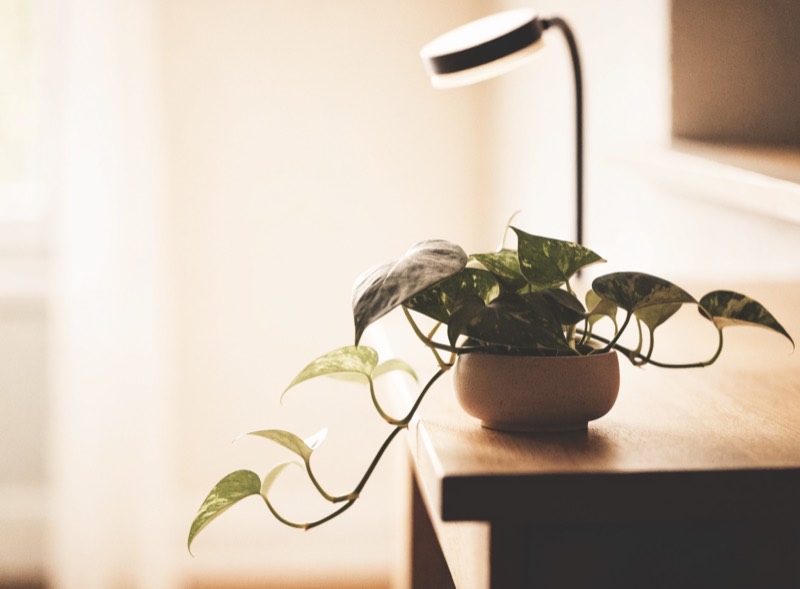
Clip-On Full-Spectrum Grow Light
Clips to a shelf or the back of the desk and runs on a timer, so it happens whether or not you remember. Full-spectrum, which matters — purple-only lamps work but make the corner look like a laboratory.
Twelve hours a day is plenty. The common mistake is running it constantly: plants need a dark period, and continuous light stresses them.
Watering kills more than darkness
Overwatering is the leading cause of death for every plant listed above. Roots need air as much as water, and permanently wet soil suffocates them.
Ignore schedules. Put a finger two inches into the soil; if it is damp, wait. For a ZZ or snake plant in low light that can mean three weeks in winter, which feels like neglect and is correct.
The pot is doing more than you think
Two things about pots decide more outcomes than the plant choice does.
Drainage. A decorative pot with no hole is a reservoir. Water collects at the bottom where you cannot see it and the roots sit in it. Keep the plant in its plastic nursery pot, drop that inside the nice one, and lift it out to water. This single habit prevents most desk-plant deaths.
Size. Repotting into something much larger is a common act of kindness that backfires. A large volume of soil around a small root ball stays wet far too long. Go up one size, not three.
What to do when it starts looking bad
Three symptoms cover almost everything you will see on a desk:
- Yellow lower leaves, soft stems. Overwatering, nearly always. Stop, let it dry properly, and check the pot drains.
- Long bare stems with leaves only at the ends. Not enough light. The plant is stretching toward the nearest source. Move it or add a lamp.
- Crisp brown edges. Usually dry air rather than dry soil — common next to a radiator or a vent. Move it away from the airflow first before watering more.
One plant, not five
A single healthy plant does more for a desk than a cluster of struggling ones, and it does not eat the surface. Put it out of the working zone — back corner, a shelf above, or hanging — so it is in your eyeline but not under your hands.
The Home Office Setup Guide
Eighteen pages: the six measurements with a printable worksheet, three complete builds with every piece listed, a lighting plan for awkward rooms, and small-desk layouts. Free.
Get the guide